[Book Review] AI Semiconductor Industry at a Glance
- This is not just a book about semiconductor processes. It is a wide-ranging history of the industry that made the AI era possible.
- Following the choices of companies like TSMC, Samsung, Intel, SK hynix, Google, and Microsoft makes the bigger picture much easier to understand.
- It connects compute chips, memory, packaging, foundry equipment, data centers, and cloud infrastructure into a single story.
- I especially recommend it to readers who follow AI news but still feel fuzzy about the hardware and production ecosystem behind it.
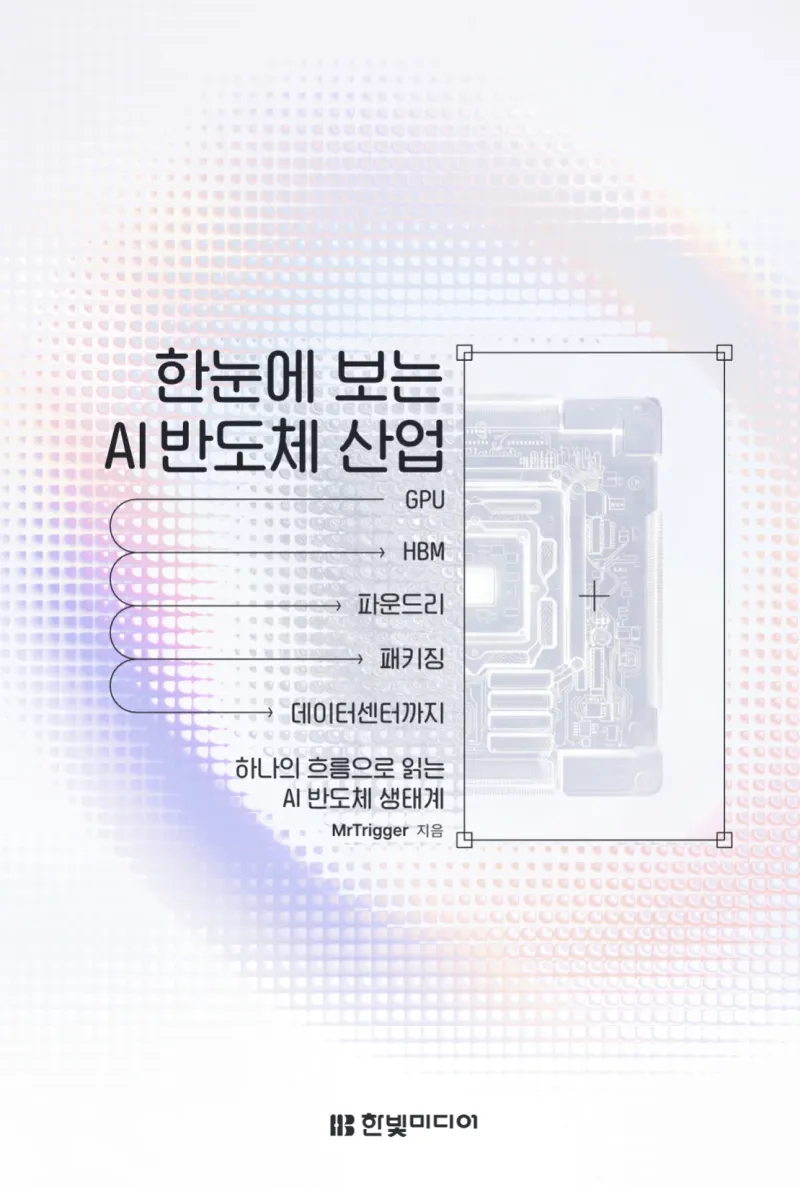
"This review was written after receiving a complimentary copy through Hanbit Media's I Am a Reviewer program."TL;DR
From the title alone, I expected a book that stayed narrowly focused on semiconductors. In practice, it turned out to be a much broader story about the last 20 to 30 years of the IT industry, told through companies and their decisions. With AI news showing up every day, this felt like the kind of book that strengthens your foundation.
Fooled by the Title
To be honest, when I first picked up the book, I expected pages and pages of semiconductor process details and chip talk. That made me slightly cautious. But once I started reading, I realized the book puts the current AI wave at the center of the story. It is a fairly substantial book, and it uses that space to cover the IT industry's evolution over roughly the last two or three decades.
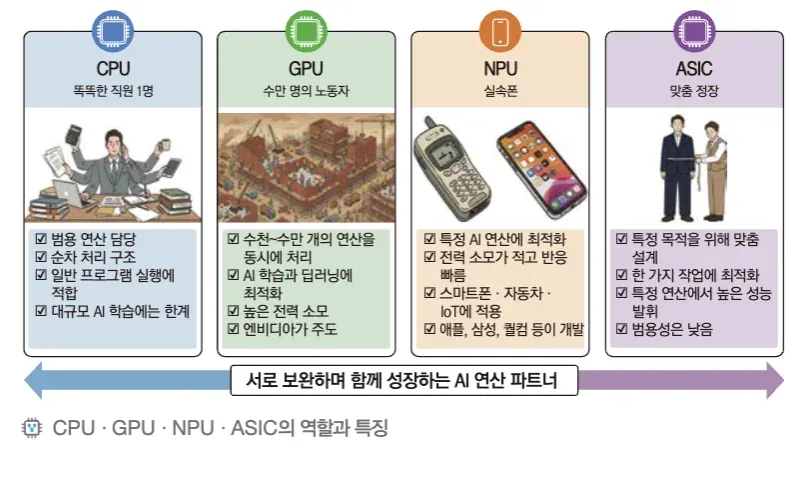
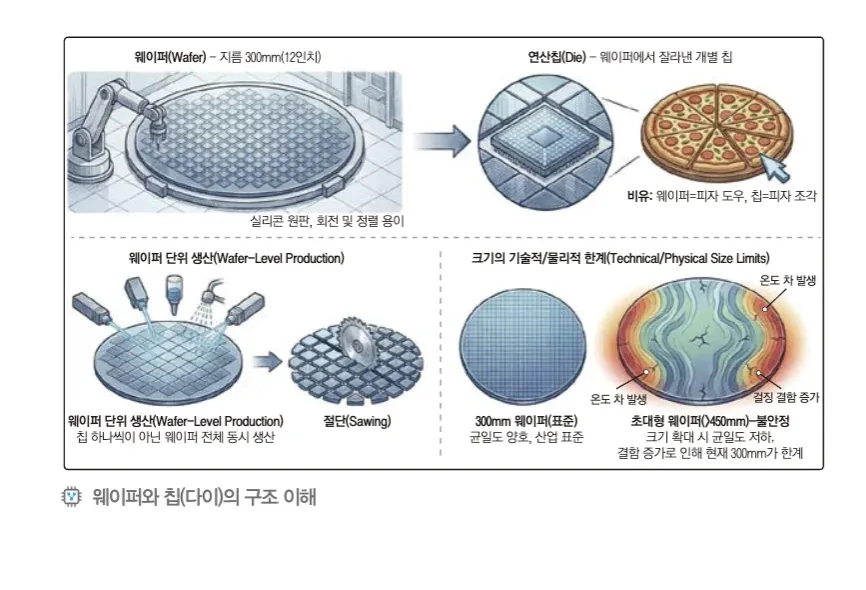
At first it presents itself as a history of AI semiconductors, but it actually goes much wider than that. It also covers the history of GPUs, server infrastructure, and cloud computing. You can feel how much research went into pulling all of those threads together into one narrative. I also enjoyed the AI-generated illustrations scattered throughout the book.
IT History Through a Hardware Lens
There was a time when I used to go to electronics markets and buy computer parts to assemble PCs myself. Back then I paid attention to the differences between DDR3 and DDR4, motherboard chipsets, and the strengths of different CPU and GPU vendors.
When I worked in Korean companies, it was also common to see racks of servers running in in-house server rooms or machines hosted in an IDC. But after more than ten years as a software developer, my center of gravity gradually moved away from hardware. Instead of building servers directly, it became natural to work on top of cloud environments.
Because of that, even parts of IT history I thought I already knew felt new again in this book. The clearest example was the history of cloud computing. I had mostly seen that story from a software angle, but revisiting it from a hardware angle made the same history feel completely different. It was interesting to trace what kind of physical infrastructure made all those changes possible.
A Narrative Told Through Companies
The book's biggest strength is that it tells history through companies. As you follow why TSMC is in such a strong position today, and what choices Samsung, Intel, and SK hynix made along the way, the shape of the whole industry starts to come into focus. Google, Microsoft, Apple, and Palantir also appear, and the book keeps showing how each company responded to changing conditions through products, services, and strategy. That made it very easy to keep reading to the end.
How AI Physically Runs
The book explains what kind of hardware AI actually runs on, starting from the history of data centers. Compute chips, memory, packaging, foundry equipment, data centers, and cloud infrastructure all connect as part of one continuous flow.
The sections about ASML and lithography were especially fresh to me because they cover areas I do not normally run into. The book also naturally untangles how fabless companies, foundries, and cloud providers relate to one another.
From Computers to AI
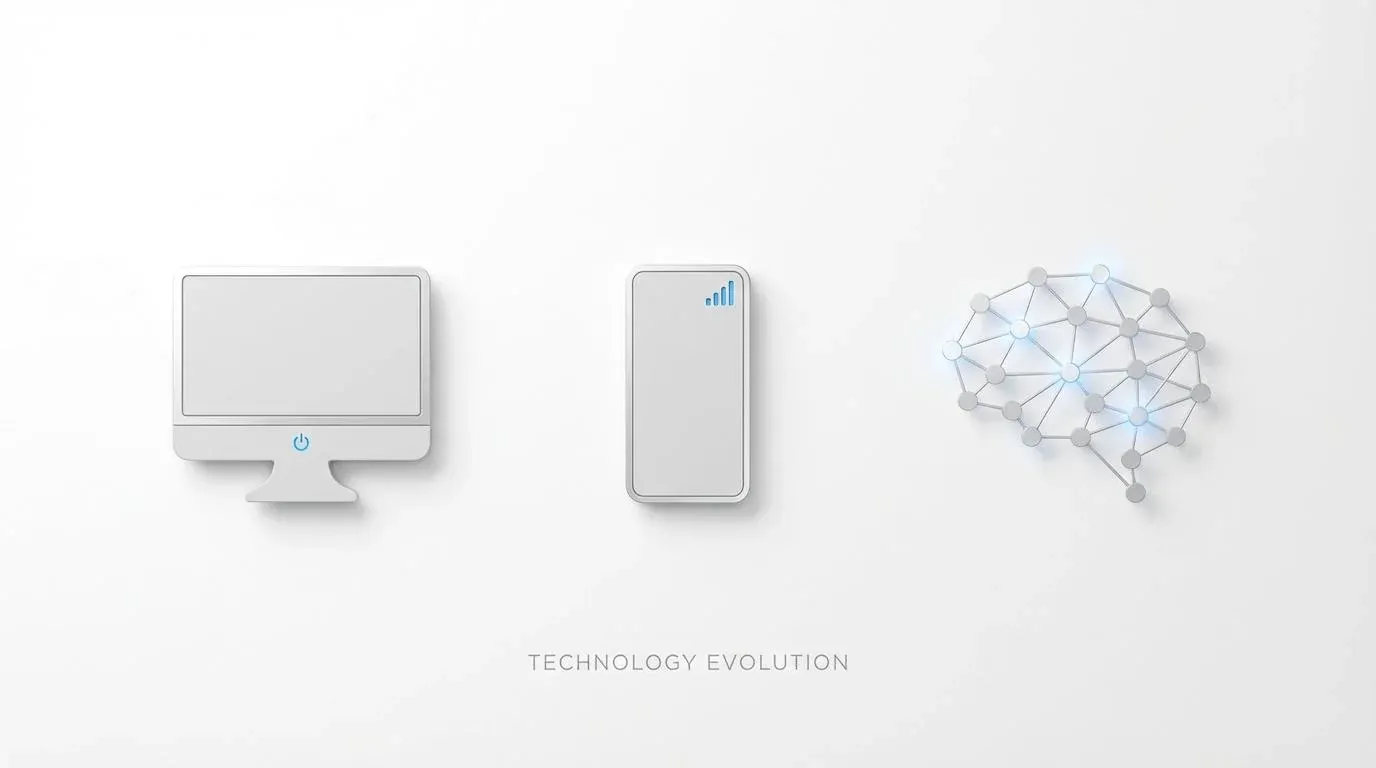
Computers, the internet, mobile, and then AI. The structure of the book walks through how each era led into the next. The parts I already knew worked as a useful review, and the parts I did not know added a lot of new context.
Stories like this can easily become dry, but the book keeps them engaging. It uses comparisons to familiar narratives and section titles that naturally pull you forward with questions like why cloud became the starting point of AI revenue models, or why hyperscalers became the center of cloud. Because of that, each section feels more like a guided explanation than a flat industry timeline.
Who Should Read It
I especially recommend this book to people who regularly follow AI news but still feel that the hardware ecosystem behind it is vague. If semiconductors, memory, foundries, and data centers all blur together for you, this book does a very good job of organizing that picture.
This is not really a book for drilling deep into semiconductor processes alone. It is much closer to a broad explanation of the history of the semiconductor and AI industries and how their parts connect. That also means it stays readable even if your technical background is not especially deep.
Once you finish it, you have a much clearer sense of why TSMC, SK hynix, NVIDIA, and Big Tech sit where they do today. That makes later AI news much easier to interpret in a more grounded way.
Closing Thoughts
Personally, I have always felt that one of the best ways to study something is to understand its history first. For example, if you study React only through features and syntax, you miss a lot. If you start by asking why React appeared in the first place, you end up understanding the surrounding context much more deeply. This book gave me that same feeling, which is one reason I liked it so much.
Right now, new AI news arrives every day. That is exactly why a book like this feels useful. After reading it, I felt that my foundation was much stronger, so newer developments became easier to absorb in a more meaningful way. More than anything else, the book stays engaging because it uses the strategic choices made by companies as the narrative backbone.
And one last detail I noticed while turning the final pages: next to the author name MrTrigger, I saw the publisher name Baekjoon Lim. There you are again, GOAT.
![[Book Review] Visualizing Generative AI](/_astro/review-visualizing-generative-ai-cover.BA0TjpHs.webp)
![[Book Review] The Math Behind AI](/_astro/review-ai-math-story-20260301222303691.CyoC-k3I.webp)
![[Book Review] AI Truth](/_astro/review-ai-truth-20240915184625237.C5vegJrL.webp)