[Book Review] AI Vibe Coding Guide for Today's Teachers with the 2022 Revised Curriculum
- In the age of AI coding, knowing the problem domain can be a stronger weapon than full-stack engineering skill.
- The book moves step by step from chat interfaces to no-code, low-code, and CLI tools, helping non-developers build their own tools.
- It is useful not only for teachers, but also for office workers and many other professionals who want to learn how to automate their own work and turn ideas into services.
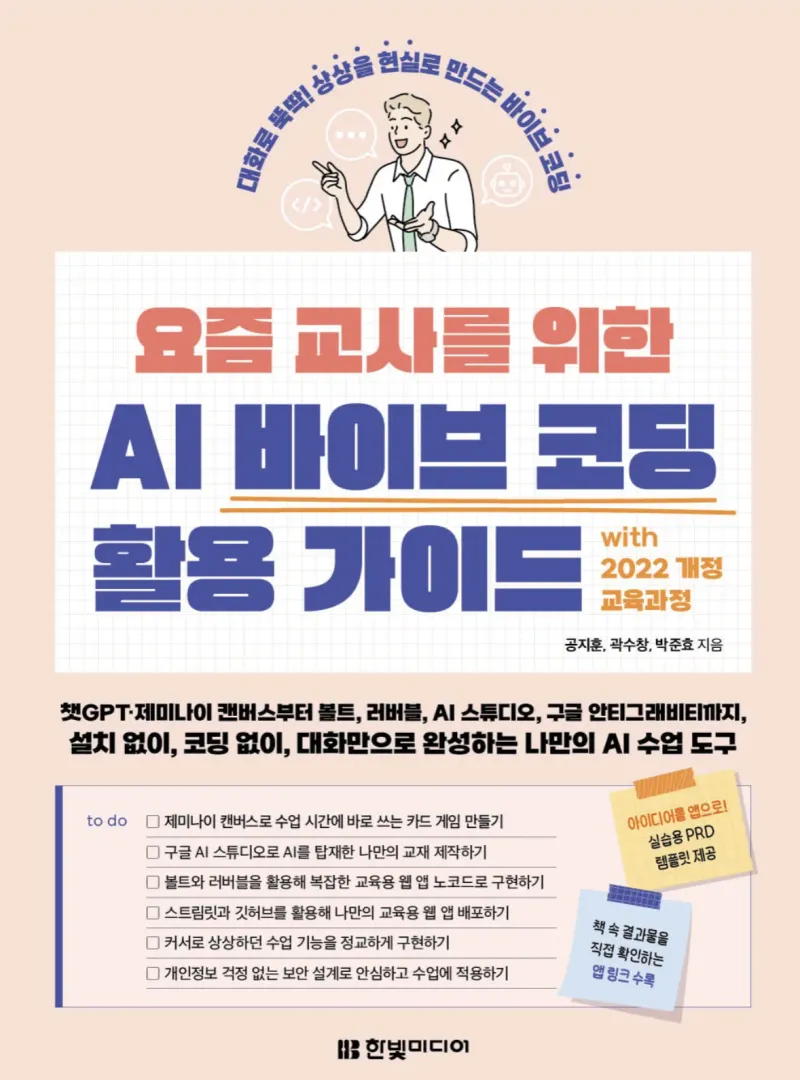
[Book Review] AI Vibe Coding Guide for Today's Teachers with the 2022 Revised Curriculum
"This review was written after receiving the book for Hanbit Media's <I am a Reviewer> activity."The two waves that changed the classroom
Over the past few years, education has been hit by two major waves in a short period of time. The first was COVID-19, and the second was AI.
COVID-19 accelerated the digital transformation of schools. Suddenly, everything moved online.
The second wave was AI. If the previous transition was about moving existing classes online, this one is changing the way teachers create materials, design assessments, and handle administrative work. We have entered an era where someone who cannot write a single line of code can still build a tool tailored to their own classroom.
Domain knowledge has become a weapon
As AI-assisted coding becomes normal, the center of gravity has shifted. The important question is less about how to code something and more about what problem to solve. In other words, domain knowledge has become far more important.
More than 13,000 people applied to the Built with Opus 4.6 hackathon, and only 500 were selected. Among the five winners, four were not professional developers. A personal-injury lawyer, a cardiologist, a road and infrastructure expert, and an electronic musician each solved problems from their own fields. Only one winner was a professional software engineer.
The next Built with Opus 4.7 hackathon showed the same pattern. The top three teams included a physician-turned-engineer from Istanbul, a former microsoldering technician from a small town in the French Alps, and a computer science teacher from Chile. None of them were typical Silicon Valley profiles.
The common thread is clear. It was not full-stack engineering skill that mattered most. The people closest to the problem used AI as a tool and solved it themselves. We are now in an era where the people who understand the problem best can directly build the solution.
Like similar books I have reviewed before, this book also introduces ways to use AI through domain knowledge.
- Review of AI Lawyer with ChatGPT
- Review of 26 Content Design Projects with ChatGPT
- Review of ChatGPT Office Productivity Master Guide
Examples that kindly show many ways to begin
Whenever people who want to build something with AI ask me which AI tool they should use or how they should start, I always find it hard to answer.
For people who want to launch an actual service, I want to recommend a CLI. But many find the terminal itself unfamiliar. If I point them to tools like Cursor or Antigravity, they sometimes feel overwhelmed by the number of features and give up after trying them a few times. In reality, vibe coding can start with just a chat interface.
From now on, I think I can simply recommend this book.
What is clever about this book is how it reduces that burden step by step. It starts from the easiest place and gradually brings the reader into a real development environment.
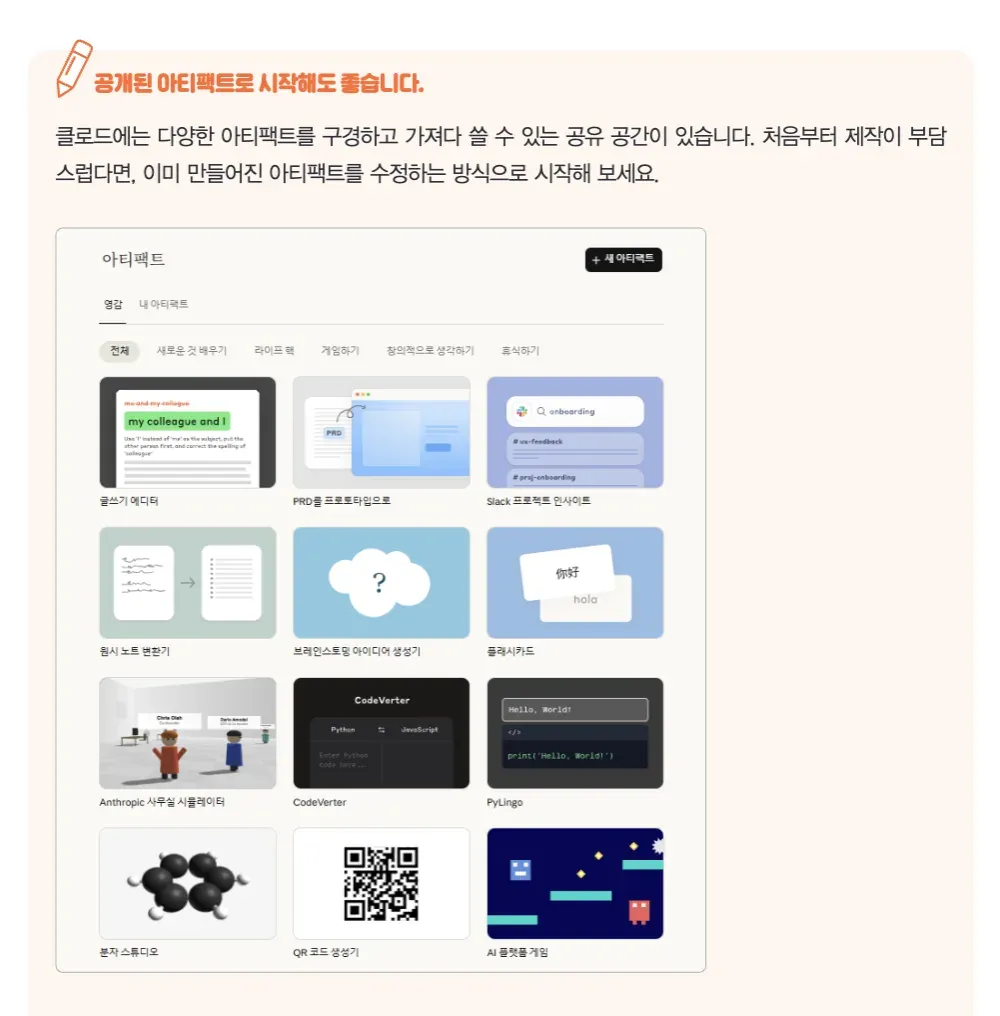
The first step is the chat interface that almost everyone already uses. You build a personal homepage with GPT Canvas, create classroom-ready tools with Gemini Canvas, and improve the result with Claude Artifacts. Because results appear through conversation without any separate installation, readers can quickly experience their first small success.
Next comes no-code tooling. With Bolt, you build a custom app for your class without coding. With Lovable, you create an emotion check-in app. With Google AI Studio, you add a reading-support chatbot. This is the point where something that looks and feels like a usable service starts to appear.
One step deeper is low-code. With Streamlit and GitHub, you quickly build a class web app. With the same combination, you add AI to a web app, and then use Apps Script to complete an app that connects to data. At this point, you move beyond simple outputs and get closer to a system that actually runs.
The final step is the CLI. Gemini CLI, Codex CLI, and Google Antigravity naturally bring the reader all the way to the terminal environment that once felt unfamiliar. Because the path starts from an easy place and climbs one step at a time, the final stage feels less intimidating and more like something worth trying.
A work guide that also works for office workers
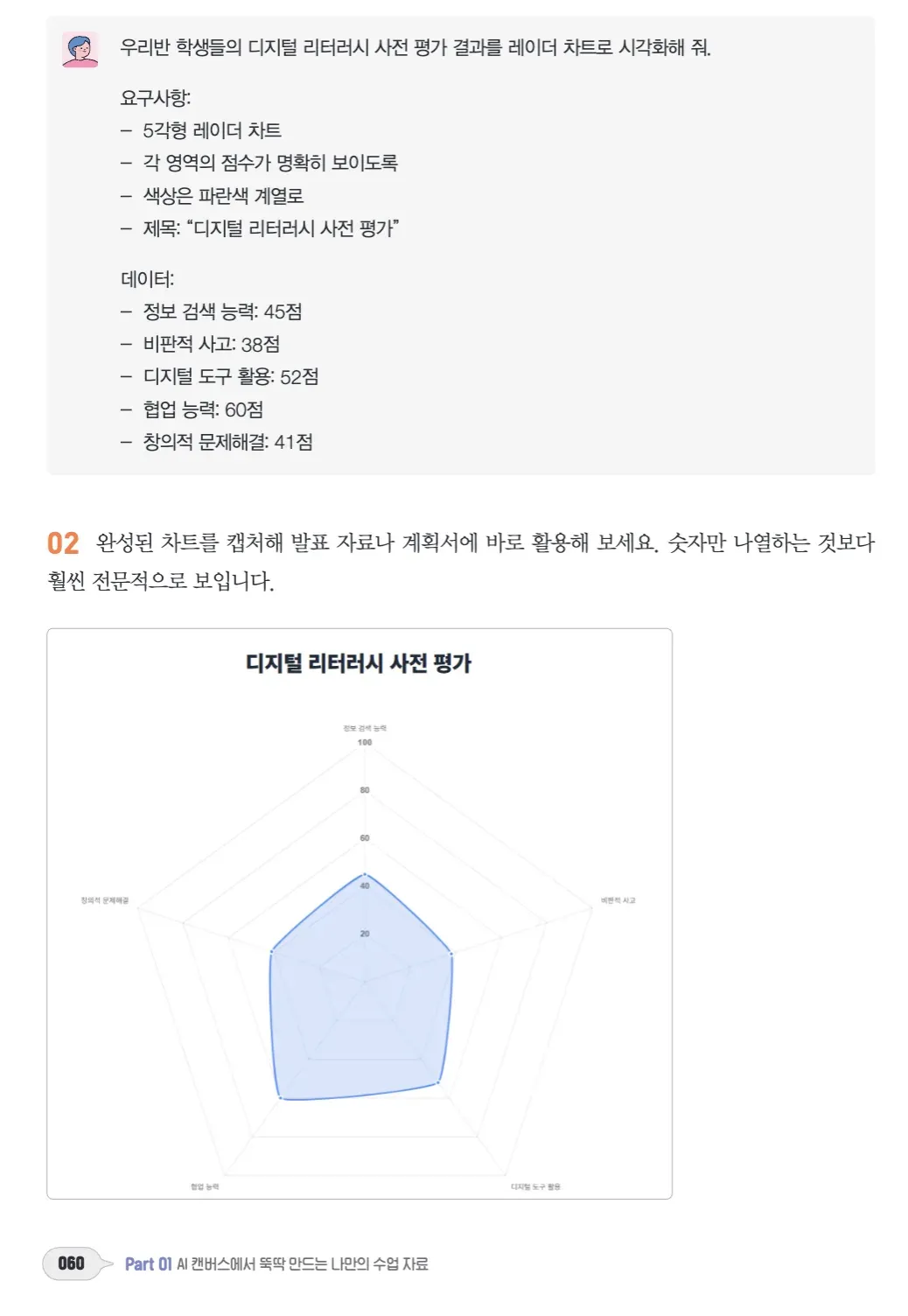
The chapter 2 section on work usage is useful not only for teachers, but for ordinary office workers as well. Document writing, data organization, and meeting notes are things many people deal with every day at work, so the examples can be reused almost directly by changing the job context. The topics include:
- Writing school notices with ChatGPT
- Quickly drafting approval documents
- Easily organizing receipts
- Automatically writing student records
- Automatically writing educational activity messages
- Using Excel and Google Sheets
- Solving meeting notes more easily
- Organizing educational documents with NotebookLM
- Creating diagram materials with Napkin AI
A book that teaches a way of thinking, not just tools
The real strength of this book is somewhere else. It does not merely tell you which buttons to click. It teaches a way to think in systems.
For people who have not used vibe coding or AI very much yet, the biggest difficulty is usually not the tool itself. It is the first question: “So what should I automate?” The book points directly at that problem and opens a path with a three-step diagnosis for work automation.
Step one is to look through last year’s document registration records in the work portal and list the tasks you performed and the estimated time each took. Step two is to choose tasks that repeat weekly or monthly, take more than 30 minutes each time, and follow clear rules. Step three is to pick the one task that repeats most often, feels most annoying, and consumes the most time as the first automation target.
It may sound simple, but the framework is powerful. It makes you apply the idea directly to your own situation. For a teacher, that might be student records. For an office worker, it might be a weekly report. Tools will keep changing, but this thinking framework remains. In the end, it helps readers develop the ability to discover what they should do with AI.
What matters most is what you want to build
After narrowing down what to automate with the three-step diagnosis, the book moves on to the question of what you want to build.
Before experiencing vibe coding, ideas often remain buried. You do not know how to build them. Or sometimes you do not have ideas at all. But once you experience creating a service through conversation, ideas start to appear.
The book also explains how not to let those ideas slip away. It shares how to write a PRD that clarifies what you want to build and why, and then walks through using that PRD to reach actual service deployment through various hands-on tasks. You experience one full cycle in which an idea in your head becomes a PRD and then a deployed service.
Once you go through that flow, you start to get a feel for it. Next time, you can put another idea into the same framework and run it on your own.
A surprisingly solid appendix
The appendix is as solid as the main text. Personally, when I read a book in an unfamiliar field, I am always glad to see a glossary. Knowing the terms makes a bigger difference than it might seem.
Image generation is a good example. Someone who understands photography terms such as aperture, shutter speed, bokeh, wide angle, golden hour, and low angle will get completely different results from someone who simply writes “make it pretty.” The more accurately you understand the language, the more precisely you can ask for what you want. Vibe coding is the same. Terminology becomes the foundation that lets you communicate clearly with AI.
One especially good part was the section on selection criteria for teacher-developed edtech and learning-support software. It directly addresses a practical question: can I use an app I built myself with students in class? It explains that under the August 2025 revision to the Elementary and Secondary Education Act, starting in the 2026 school year, schools must follow Ministry of Education criteria and go through school steering committee review when selecting learning-support software as educational material. It also covers issues such as how to handle privacy policies.
If the book only explained how to build things, it would have been incomplete. The fact that it also points out procedures that someone outside the field might easily miss, and might otherwise get wrong, makes the book more trustworthy.
A modest title
The title says “for teachers,” but the book is not actually limited to teacher use cases.
As you read through it, you realize that much of the content works like a template. If you work in real estate, you can swap in real estate work. If you work in construction, you can swap in construction work. Anyone can adapt the examples to build something useful for themselves or for someone else.
That is why I want to call it a modest title. It could easily have been called “for today’s people” rather than “for today’s teachers,” because the content is accessible, broad, detailed, and useful.
Closing thoughts
When AI use spreads across many fields, it may feel in the short term as though the role of developers is shrinking. But from the other side, books like this are also lowering the barrier to work that used to be locked inside different professions, environments, and job functions.
For developers, that is actually an opportunity. It feels like a good time to move beyond being someone who only writes code and become a more rounded product engineer who can also embrace domain knowledge.
This also resonated with me personally. As my child grows up—though they still cannot really talk yet, haha—I have been thinking a lot about how AI might be used in education. I think this book will be very helpful going forward.
Refs
- AI Vibe Coding Guide for Today's Teachers with the 2022 Revised Curriculum (Hanbit Media)
- Meet the winners of the Built with Opus 4.7 Claude Code hackathon (Anthropic)
- Meet the winners of our Built with Opus 4.6 Claude Code hackathon (Anthropic)
- Review of AI Lawyer with ChatGPT
- Review of 26 Content Design Projects with ChatGPT
- Review of ChatGPT Office Productivity Master Guide
![[Book Review] Beyond Vibe Coding - A Developer's Survival Guide](/_astro/review-beyond-vibe-coding-20251130095930841.B9WOKQ7C.webp)
![[Course Review] Learning Vibe Coding with Claude Code](/_astro/review-vibe-coding-with-claude-code-course-cover-20260926154001.Crjc6vkx.webp)
![[Book Review] ChatGPT Office Productivity Master Guide for Working Professionals](/_astro/review-chatgpt-office-productivity-master-guide-20250418235456734.CGXc8opl.webp)