[Book Review] Dify AI, The No-Code Future
- A practical review of Dify-focused material from a no-code/low-code LLM product lens.
- Shows where teams gain speed and where platform limits appear when shipping AI features fast.
"This review was written as part of Hanbit Media's <I am a Reviewer> program with a sponsored copy of the book."Dify AI, The No-Code Future
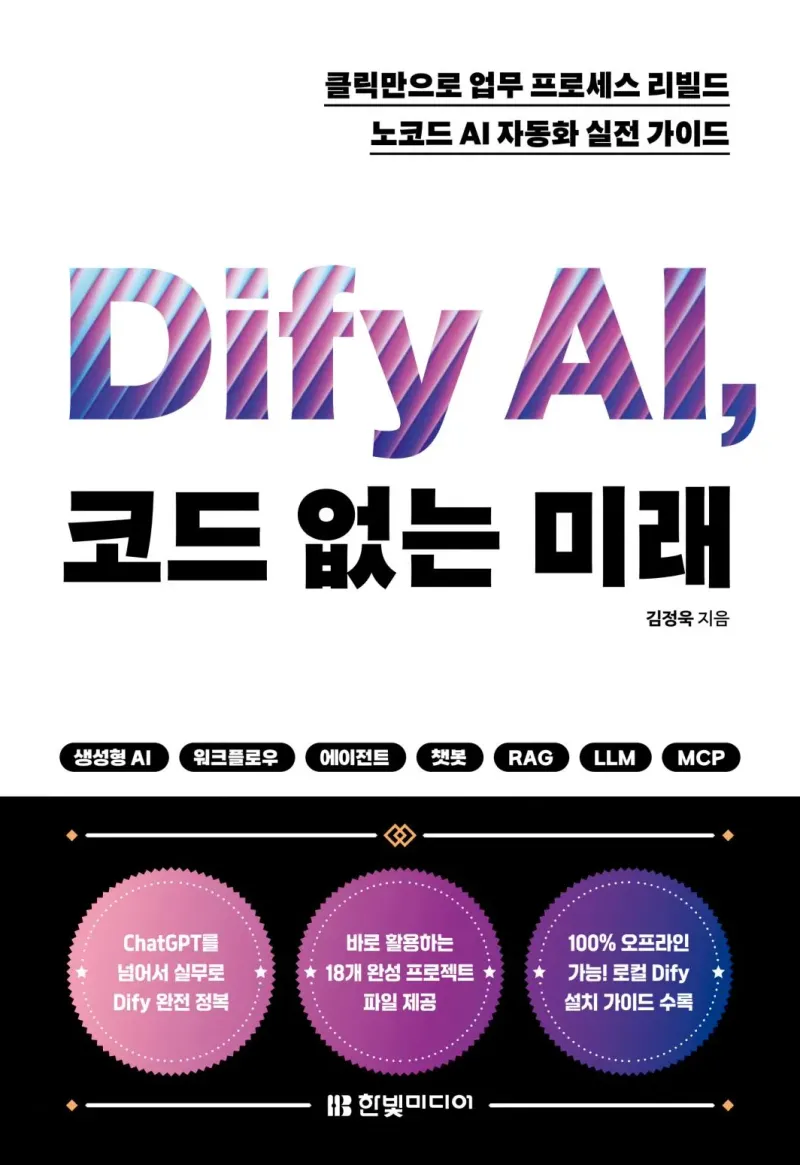
I recently had the opportunity to review 'Dify AI, The No-Code Future' (Dify AI, 코드 없는 미래).
I've been researching AI workflow automation platforms like n8n and Flowise lately, so I was excited to discover a book dedicated to Dify. Working on AI product development at my company, I've realized we're entering an era where prototyping and simple automation no longer require writing code. This book provides a practical guide to exactly that kind of no-code AI automation.
About the Author
Author Kim Jung-wook works professionally in AI-related fields and has systematically organized practical Dify usage based on real-world experience.
Book Overview
This book covers no-code AI automation using Dify. It's structured to let you practice essential concepts needed for modern AI service development—generative AI, workflows, agents, chatbots, RAG, LLM, and MCP—all on the Dify platform. Particularly valuable are the 18 complete project files provided and the guide for 100% offline local Dify installation, making it highly practical.
Book Review
Low Learning Curve
Building AI agents used to require writing code directly with LangChain or LangFlow, but increasingly user-friendly interfaces are emerging. Dify is part of this trend.
Before Dify, I explored Langflow and n8n. While n8n is an excellent tool, it's not entirely specialized for AI workflows, requiring additional configuration for LLM integration or RAG setup. In contrast, Dify was built from the ground up for LLM application development, resulting in a notably lower learning curve. Just reading halfway through the book gave me such a clear understanding of the overall flow that I could immediately apply it in practice.
Examples Covering Diverse Scenarios
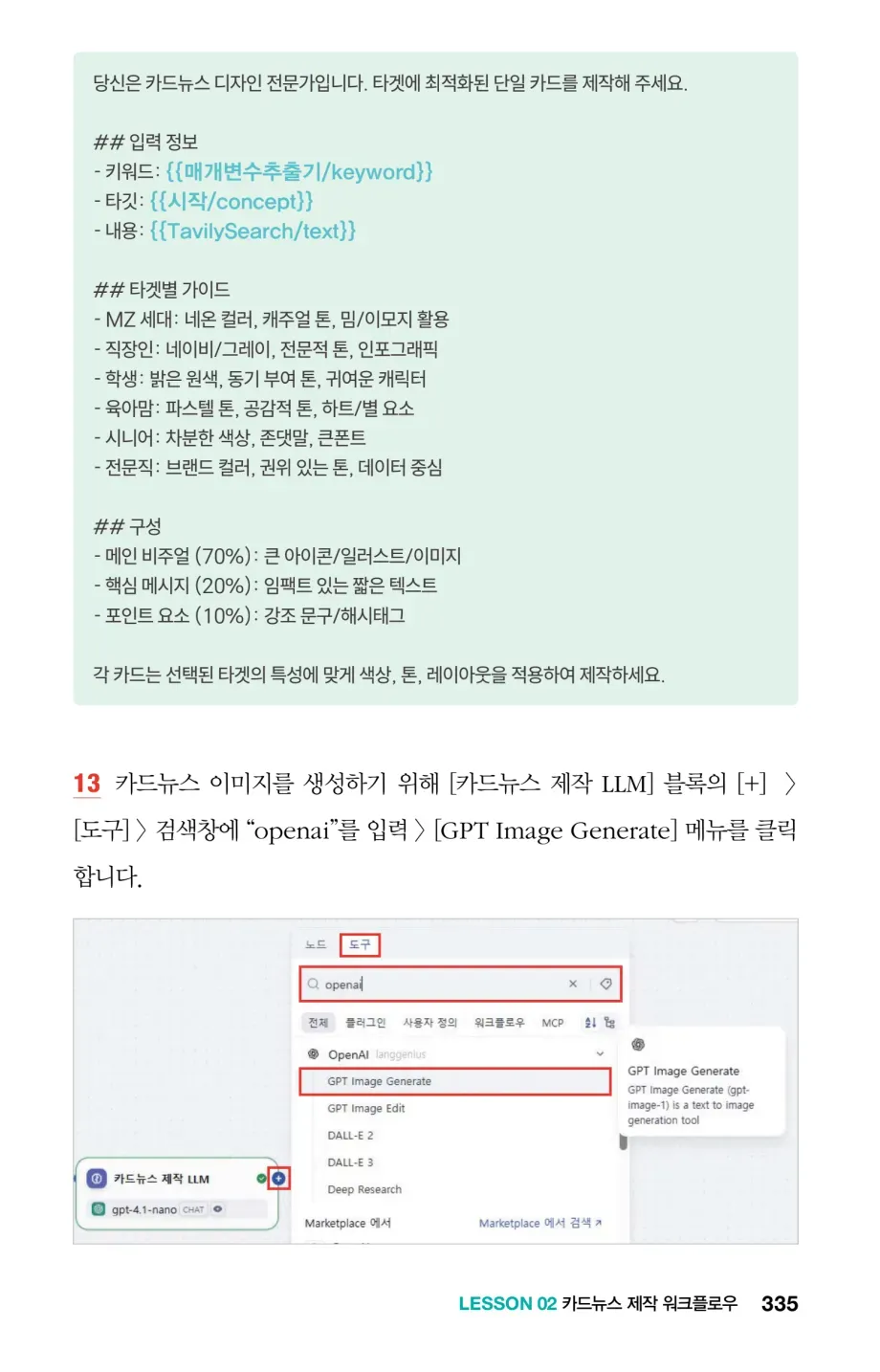
A major strength of this book is its coverage of various scenarios. From simple chatbots to RAG-based document search, workflow automation, and agent configuration—practicing these different cases helped me quickly become comfortable with Dify. I particularly appreciated the assignments at the end of each chapter for review.
Advantages of Open Source
Dify being open source was a huge attraction for me personally. While there's a cloud version, the ability to self-host it on your own server is excellent. I'm planning to deploy Dify on Oracle Cloud, which offers pretty decent free instances, to use it at no cost. The book provides detailed local Dify installation guidance, which should be helpful for anyone considering self-hosting.
Considering Real Service Application
Rather than just reading the book and moving on, I'm planning to actually apply Dify to my personal and side projects. RAG-based document search and simple automation workflows seem entirely feasible with Dify, so I intend to use it as a prototyping tool.

Target Audience
I recommend this book to anyone interested in AI automation or no-code tools—especially those who want to build LLM-powered services even without being developers. Development experience certainly helps you leverage it faster, but the book explains things so clearly that non-developers should be able to follow along.
Closing Thoughts
With AI tools flooding the market daily, Dify seems to have established a solid position as a platform specialized in LLM application development. Integration with Zapier dramatically extends Dify's capabilities—connecting to thousands of apps opens up endless automation possibilities.
This book provided an excellent opportunity to learn Dify's overall functionality and apply it to real projects. If you're considering n8n or other automation tools, I encourage you to take a look at Dify as well.
This marks my final review of the year. Among the numerous AI-related books published this year, this one stands out as a practical guide worth exploring.
![[Book Review] ChatGPT Office Productivity Master Guide for Working Professionals](/_astro/review-chatgpt-office-productivity-master-guide-20250418235456734.CGXc8opl.webp)
![[Book Review] Learning LangChain: Implementing RAG, Agents, and Cognitive Architecture with LangChain and LangGraph](/_astro/review-learning-langchain-20250629212214926.MxZbPAfN.webp)
![[Book Review] Beyond Vibe Coding - A Developer's Survival Guide](/_astro/review-beyond-vibe-coding-20251130095930841.B9WOKQ7C.webp)