[Course Review] Learning Vibe Coding with Claude Code

This review was written after receiving complimentary access to the course as part of Hanbit Media's <I am a Reviewer> program.
About the Instructor
The course is taught by Taeho Jo, a professor in the Department of Radiology at Indiana University School of Medicine. While researching this review, I learned that his work applies deep learning to Alzheimer's diagnosis, tracking disease-related proteins, and predicting genetic variants. In 2014, he reportedly published pioneering research applying deep learning to protein structure prediction, which was featured in The Economist.
I also discovered that he wrote the bestselling Korean book 『모두의 딥러닝』 (Deep Learning for Everyone). The book that shares this course's Korean title, 『혼자 공부하는 바이브 코딩 with 클로드 코드』, has also secured an English-language publishing rights deal for the UK and US markets, reportedly a first for a Korean IT technical book.
A First Lesson That Starts with Dementia Research
The first lesson opens with the professor's research rather than coding. He briefly shows how MCP connections can help handle research tasks in dementia studies that previously required people to look things up and organize the information manually.
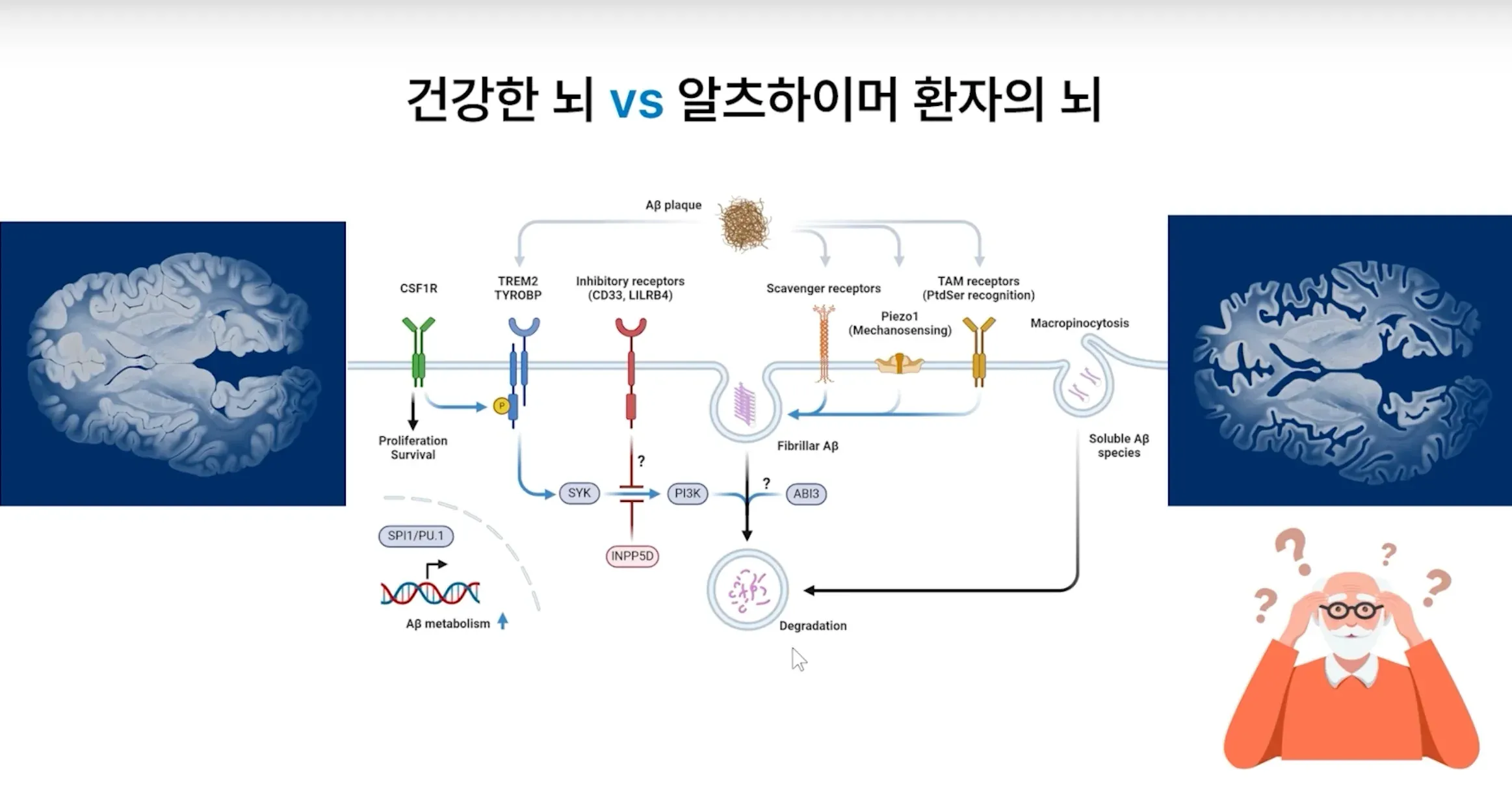
It is a short introduction, but I think it captures the direction of the entire course. The message is that vibe coding goes beyond quickly putting together an app: it can change how people work in specialized fields. Seeing AI used in a professional research setting right from the start made this an especially memorable introduction.
The Inevitable MNIST
MNIST appears early in the course. It is the handwritten-digit dataset that seems to show up in every deep learning or machine learning class. That feels fitting for the author of Deep Learning for Everyone.
At first, I was surprised to see MNIST in a vibe coding course. But since it is a staple of introductory AI courses, there is no particular reason to leave it out here. Getting a feel for how AI works makes the later material much easier to understand.
Projects Drawn from Everyday Life
One of the main projects is an app that identifies ingredients in a photo of your refrigerator and suggests recipes. You connect an image recognition model and a generative language model through APIs, then use vibe coding to build an app that can interpret the input and produce an answer.
I really liked the choice of project. Most of us have stood in front of the fridge wondering what to cook. Starting with an everyday problem makes it easy to see how AI could fit into your own life. I could see this being useful for people who are not developers, too.
Understanding Agents and Subagents
Agents and subagents can be among the most confusing concepts when you first get into vibe coding. You hear the terms everywhere, but it is harder to picture how to divide work between them. Of course, trying them yourself tends to make things click pretty quickly.
This course introduces the concepts naturally as you work through the projects. Breaking tasks into smaller pieces and assigning them to different roles feels like a much more memorable way to learn than studying definitions alone.
Building Your Own Harness with MCP, Skills, and Plugin Marketplaces
This was the most valuable part for me. The course shows how to take a fresh, vanilla installation of Claude Code and add MCP, skills, and plugin marketplaces to build your own harness.
Even with the same model, the tools and context you provide can make a huge difference to the results. I was surprised to see an introductory course go this far, and I found material worth considering even as someone who already uses Claude Code at work. The official GitHub repository also points to resources that collect skills, plugins, and MCP servers with Korean summaries, so those are worth exploring alongside the course.
Personally, I think building your own harness as you use the tools is more effective than adopting someone else's setup wholesale. The course seems to take a similar approach.
AI History and Harness Engineering
The course is not all hands-on exercises. Along the way, it covers how OpenAI's ChatGPT and Anthropic's Claude have developed, tracing the evolution of different companies' models. That progression eventually leads into harness engineering.
Understanding how the focus has shifted from prompt engineering to context engineering and then harness engineering helped me connect the dots. It reinforced why the MCP connections and skills introduced earlier matter.
Advanced Tips in an Introductory Course
Overall, this is clearly a course about the fundamentals. But as you listen, an experienced practitioner's casually shared tips keep appearing. You can sense the years spent using AI in a specialized field, running into problems, and thinking through solutions.
Beginners can follow the course from start to finish, while people who already use AI tools can enjoy picking up those tips along the way. The audience feels broader than I initially expected.
Closing Thoughts
I went in expecting a light introduction to vibe coding and came away with more than I anticipated. The progression from everyday projects to agents and harnesses feels smooth. Above all, the instructor's experience using AI in actual research gives the material credibility.
In an interview, he mentioned planning another book on AI for researchers and professionals. The MCP-based dementia research example in the first lesson felt like a preview of that direction. I will be looking forward to that book as well.
References
- 혼자 공부하는 바이브 코딩 with 클로드 코드 (Hanbit Media, in Korean)
- 혼자 공부하는 바이브 코딩 with 클로드 코드 (Kyobo Book Centre, in Korean)
- Official GitHub: taehojo/vibecoding
- Taeho Jo's YouTube Channel
- Why an Alzheimer's Researcher's AI Coding Book Attracted Global Attention (AI Post, in Korean)
- AI for Everyone with Professor Taeho Jo (Fast Campus, in Korean)
![[Book Review] Beyond Vibe Coding - A Developer's Survival Guide](/_astro/review-beyond-vibe-coding-20251130095930841.B9WOKQ7C.webp)
![[Book Review] AI Vibe Coding Guide for Today's Teachers with the 2022 Revised Curriculum](/_astro/review-ai-vibe-coding-guide-with-2022-revised-curriculum-cover.BWxr1kAp.webp)
![[Book Review] The Math Behind AI](/_astro/review-ai-math-story-20260301222303691.CyoC-k3I.webp)