[Book Review] Visualizing Generative AI
- This is an introductory book that broadly surveys generative AI, from text and images to agents and LLMOps.
- It is useful for mapping the overall terrain of generative AI engineering thanks to its rich references to important papers and links.
- Some translation terminology and uneven visualizations are worth keeping in mind while reading.
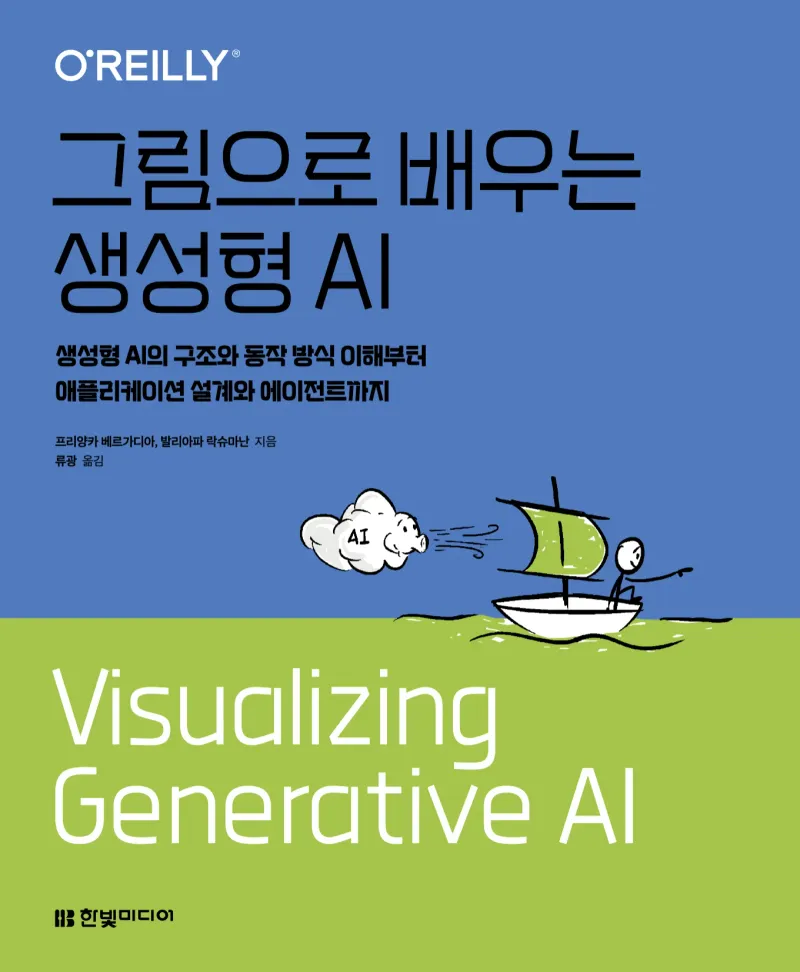
[Book Review] Visualizing Generative AI
"This review was written after receiving a review copy from Hanbit Media as part of its <I Am a Reviewer> program."Introduction
The book I am reviewing this month is 『그림으로 배우는 생성형 AI』, the Korean edition of 『Visualizing Generative AI: How AI Paints, Writes, and Assists』. The original title makes the book's goal immediately clear: it visualizes how AI paints, writes, and assists.
Authors and Translator
There are two original authors. Priyanka Vergadia is a Senior Director in Microsoft's Developer Advisory organization and is known for explaining complex cloud and AI technologies through visual storytelling. She is also the author of the bestselling 『Visualizing Google Cloud』. Valliappa Lakshmanan, or Lak, is the co-founder and CTO of Obin AI, a financial-domain AI agent startup. Before that, he worked at Google Cloud as Director of Data Analytics and AI Solutions and has written several books for O'Reilly.
The Korean translation is by Ryu Gwang, who also translated 『The Art of Computer Programming』, a book I read years ago. That book is famously difficult, and this brought back memories of spending months in the school library more than a decade ago trying to finish it.
A Broad Range of Topics
Let's start with the book's structure. It is divided into four parts.
- The concepts and mechanics of generative AI, along with prompt usage
- Real-world use cases for AI
- Building generative AI applications, including systems and architecture
- Responsible AI use
Images, text, and video generation could each fill an entire book on their own, but this book covers all of them in one volume. Because of that, it includes many visualizations that explain architectures and broader flows.
Who This Book Is Good For
Broad and Shallow AI Engineering
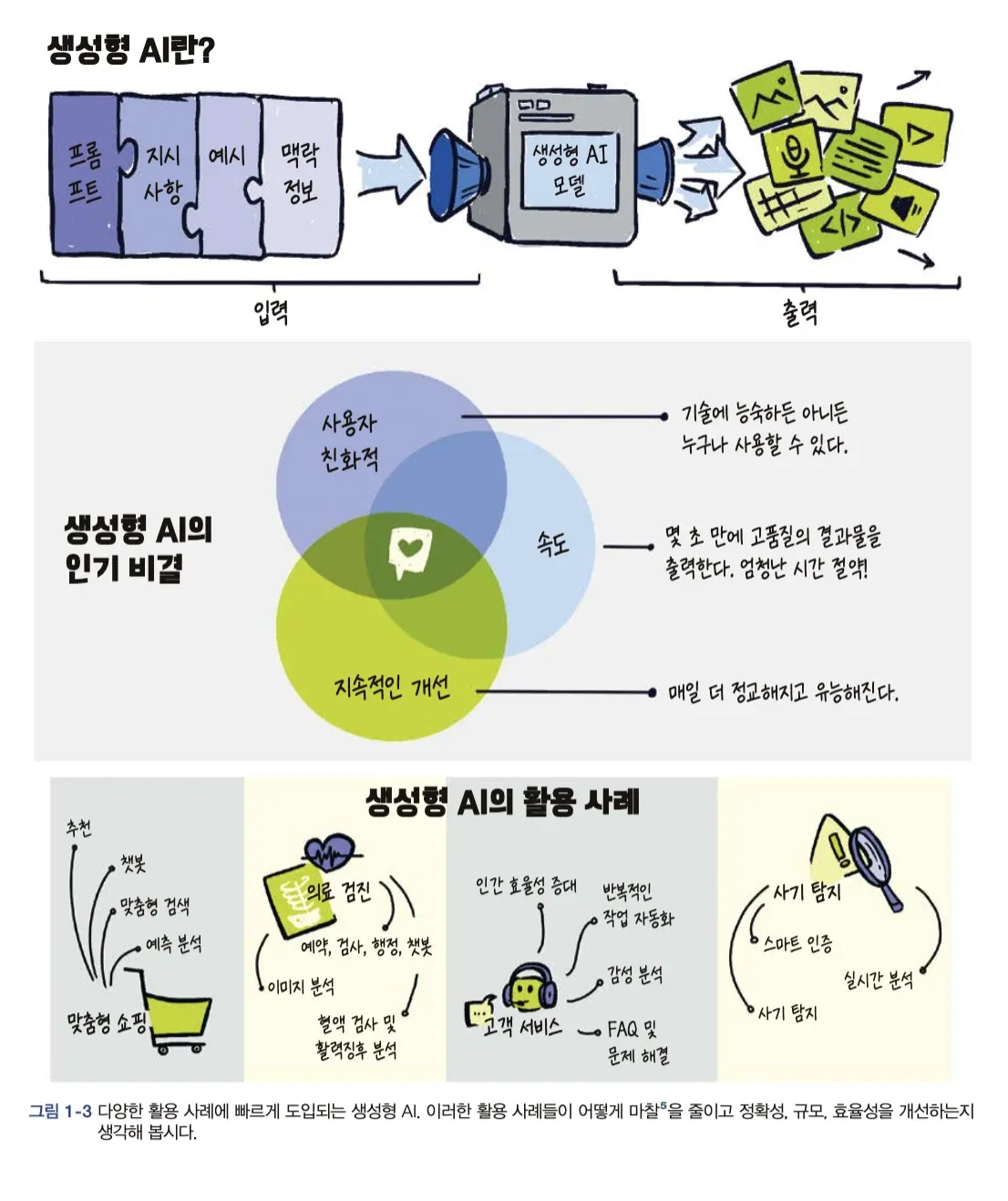
The introduction, especially the section on why the authors wrote this book, makes the intent clear. It is meant as a guide to the core concepts that matter when building real-world generative AI applications. In that sense, the topics are broad and shallow.
It starts with what generative AI is, then covers text, images, machine learning, audio, and video. It also discusses how each type is used, agent systems, LangChain, LLMOps, and responsible AI. With that many topics, 349 pages inevitably feel tight.
As a result, the terminology comes at you fast. This can be both a strength and a weakness, but I think it works well for beginners who are already somewhat familiar with the terms. Complete beginners will probably find it difficult. Reading it may be stressful. But sometimes that kind of stress is necessary.
Many Important Paper References and Links
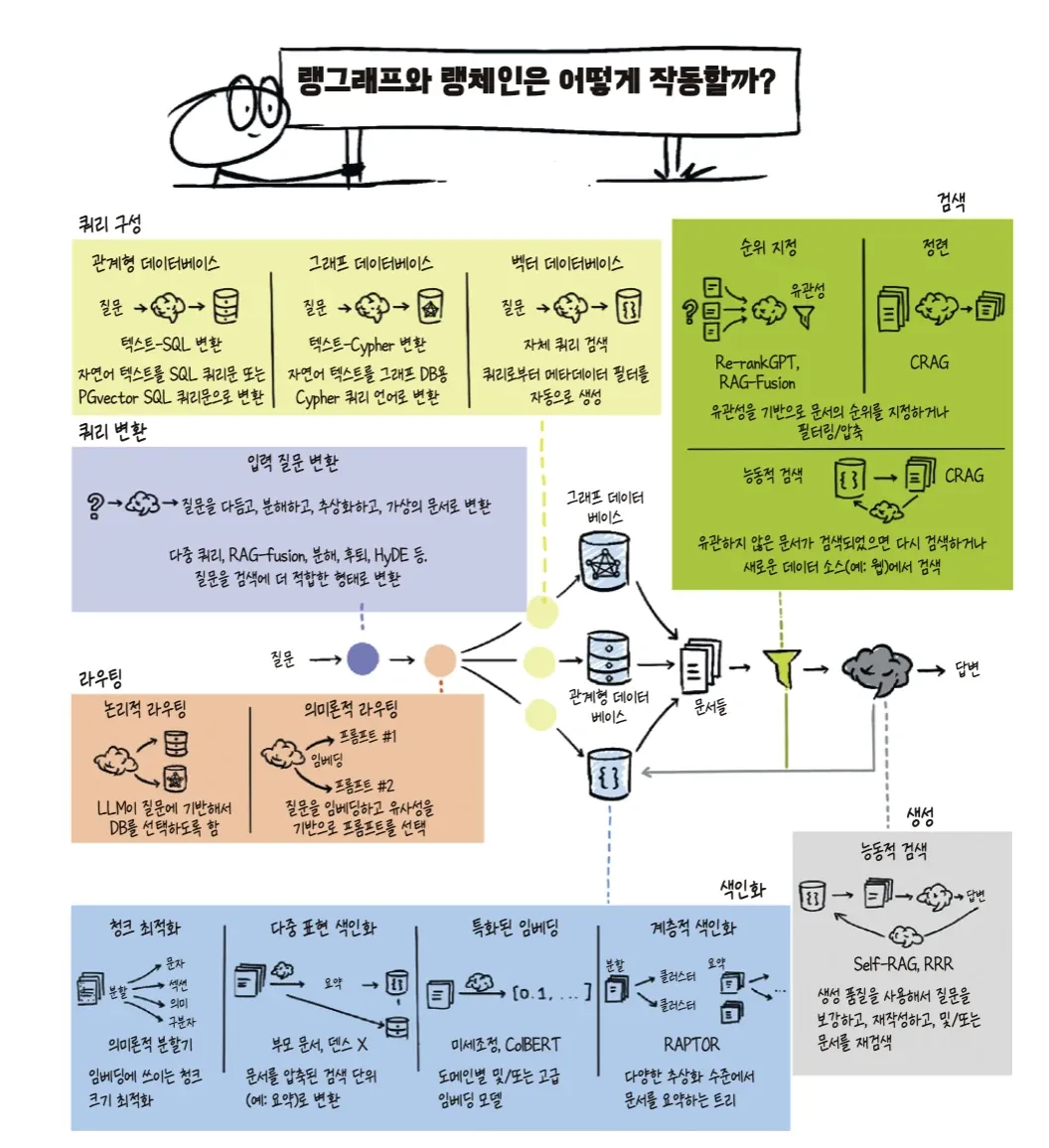
I thought I had already seen a fair number of important papers, but this book introduced me to several that I had missed. For example, I did not even know about the paper "Textbooks are all you need" until I encountered it here. The references are also linked carefully, which makes the book useful for deeper follow-up reading.
I also liked the section that applies concepts such as automation blindness, which originated in aviation, to AI.
Examples Explained Through Images
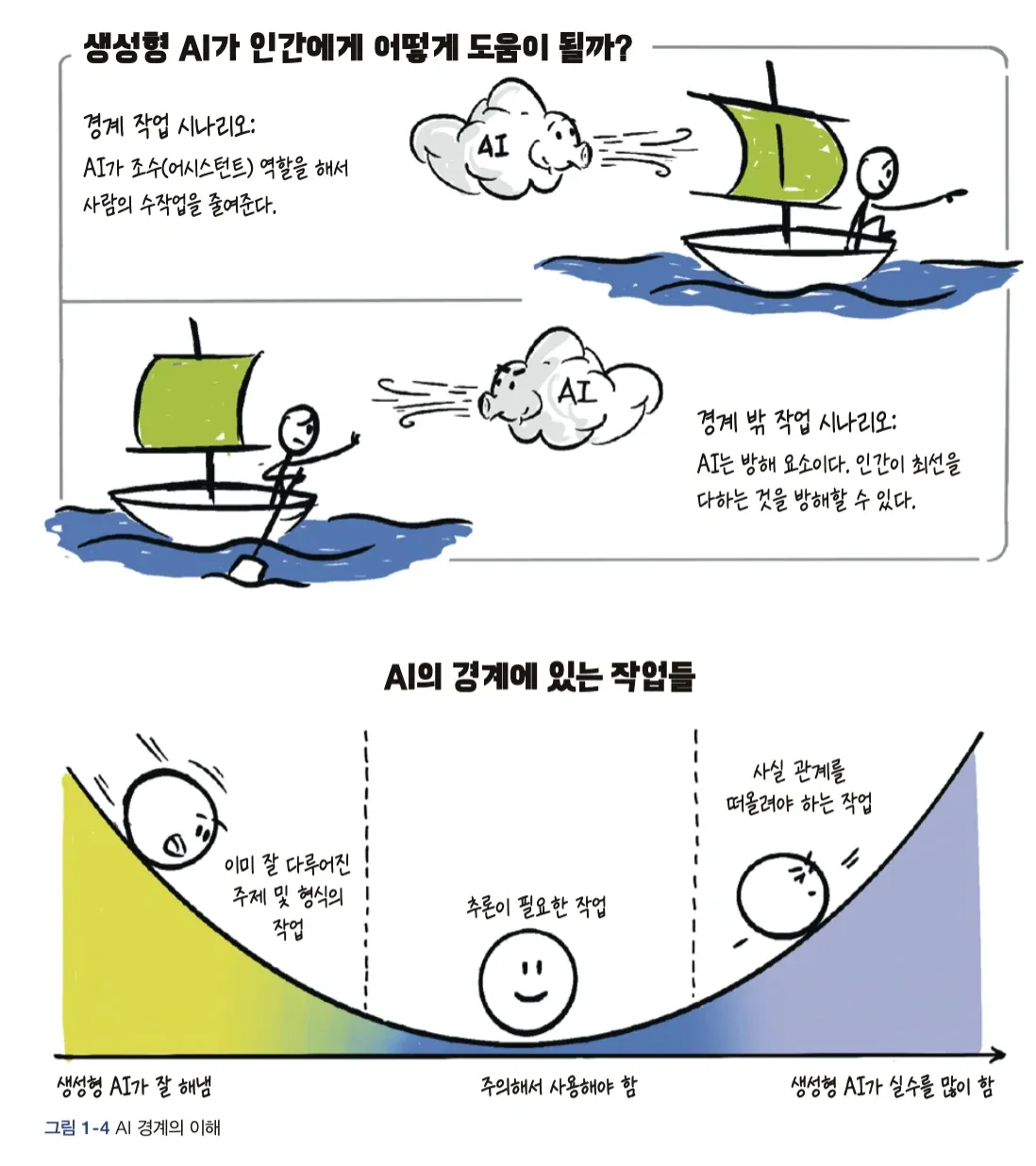
The better visualizations are definitely intuitive. The quality varies quite a bit: the good examples are really good, while the weaker ones are disappointing. But focusing on the successful cases, the visuals are clearly a strength. Being able to see a large architecture at a glance is especially valuable. After reading a long explanation, revisiting the idea through an image also helps with review.
The drawings also do not feel too flashy. There are many AI-generated-looking illustrations these days, so I liked that these had more of a pen-drawing feel.
What Fell Short
Missing Some Recent Context
Even though the original book was published in November 2025, parts of it feel somewhat dated. A lot of the material feels like something that would have come out in 2024 rather than 2025, which was a bit disappointing. On the other hand, that may also mean the book focuses on more fundamental information.
Uneven Visualizations
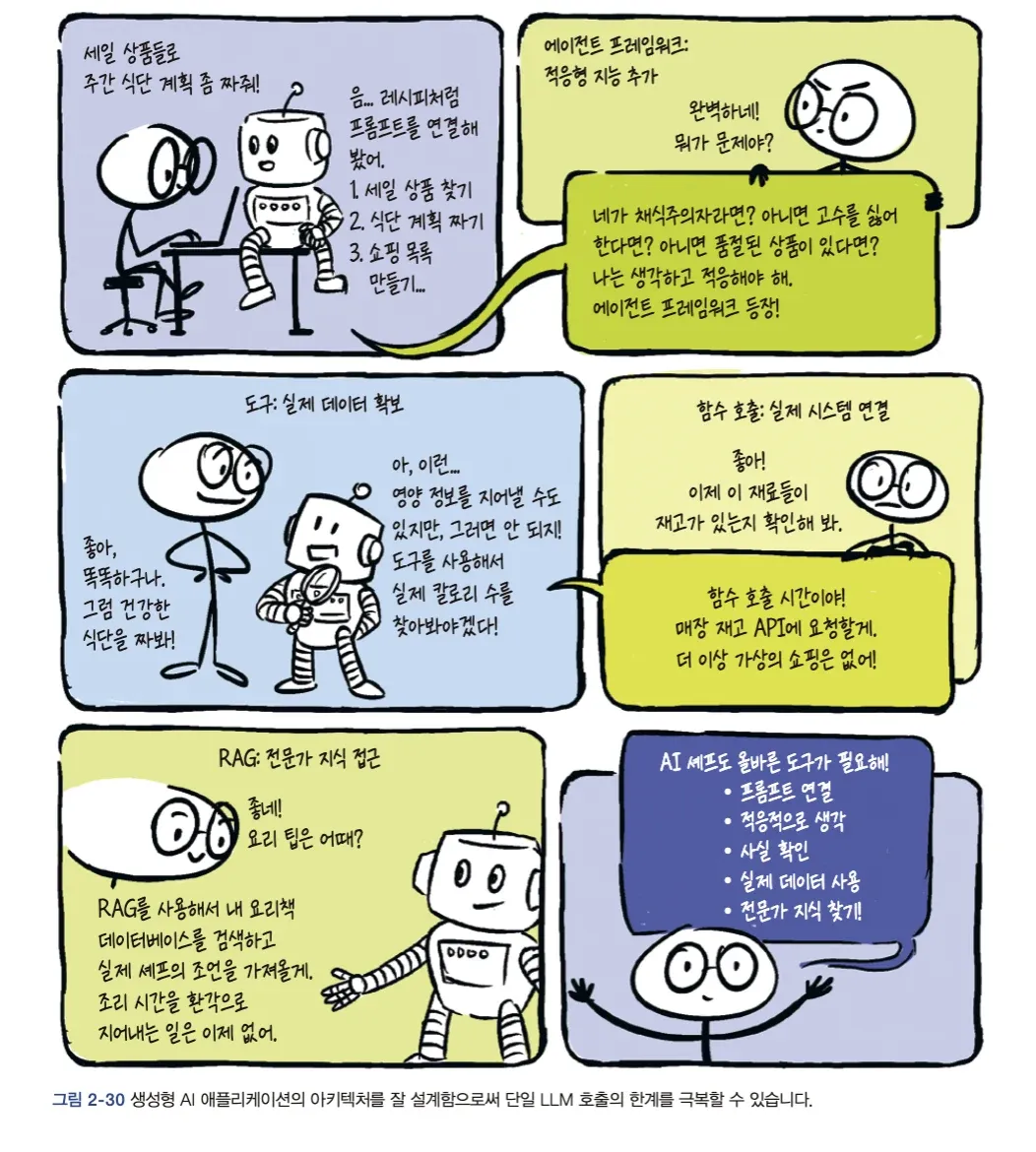
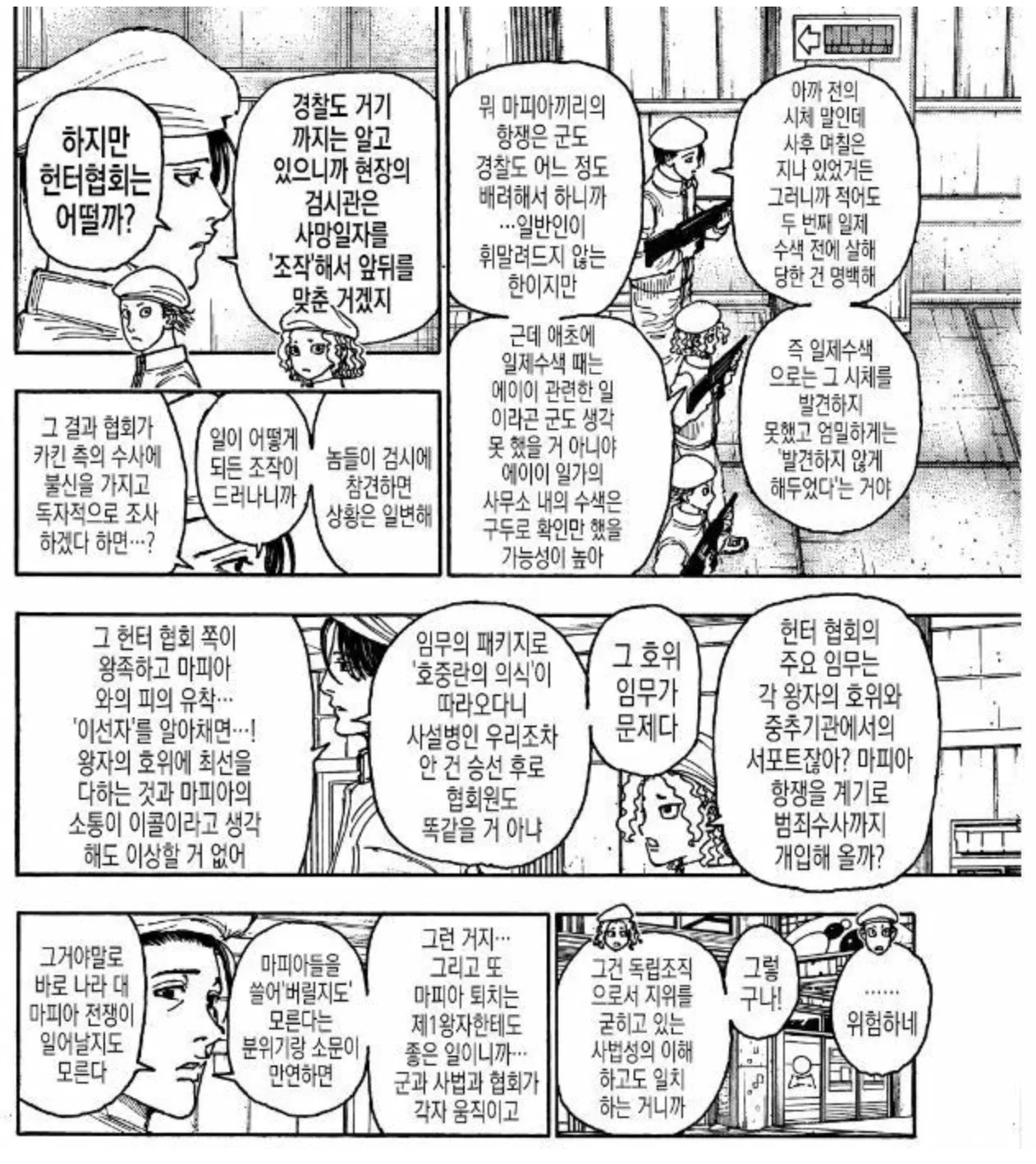
Some images contain too much text. I often found myself wondering whether they really needed to be expressed as images at all. In some cases, it felt less like visualization and more like text placed into boxes with background colors. It reminded me of reading Hunter × Hunter, a manga I personally like.
Translation Terms Become a Barrier
This was the most uncomfortable part for me. These days, I often encounter AI content through English articles or papers, so the original English terms frequently feel more intuitive. But this book translates many terms into Chinese-character-based Korean words, which sometimes made them harder to understand.
A representative example is “표집.” It did not click for me at first, and then I realized it meant “sampling.” On the other hand, terms like “meta prompting” are simply transliterated into Korean, so it was hard to tell what the translation standard was.
Looking it up, it seems Ryu Gwang's preference for Chinese-character-heavy translation choices has been controversial for a long time. I would keep that in mind before reading the book.
Closing Thoughts
This is a good book for getting a broad overview of generative AI. It connects key topics such as text, images, audio, agents, LLMOps, and responsible AI into a single flow, which helped me build a clearer overall picture. The references to important papers are also rich, and while reading, I naturally found topics I wanted to dig into separately.
If you are already somewhat familiar with the basic terminology, I can recommend this book as a way to map out the landscape of generative AI engineering.
![[Book Review] Creating & Editing Videos with 7 Generative AI Tools: ChatGPT, Midjourney & Runway](/_astro/review-ai-tools-for-creating-and-editing-videos-20241225144505230.EhpRMksV.webp)
![[Book Review] The Math Behind AI](/_astro/review-ai-math-story-20260301222303691.CyoC-k3I.webp)
![[Book Review] Learning LangChain: Implementing RAG, Agents, and Cognitive Architecture with LangChain and LangGraph](/_astro/review-learning-langchain-20250629212214926.MxZbPAfN.webp)