Oh My ClaudeCode: Legal Doping for Claude Code
- A usage-first review of Oh My ClaudeCode and how it changes everyday dev flow.
- It highlights immediate wins and early limitations so you can quickly decide if it belongs in your setup.

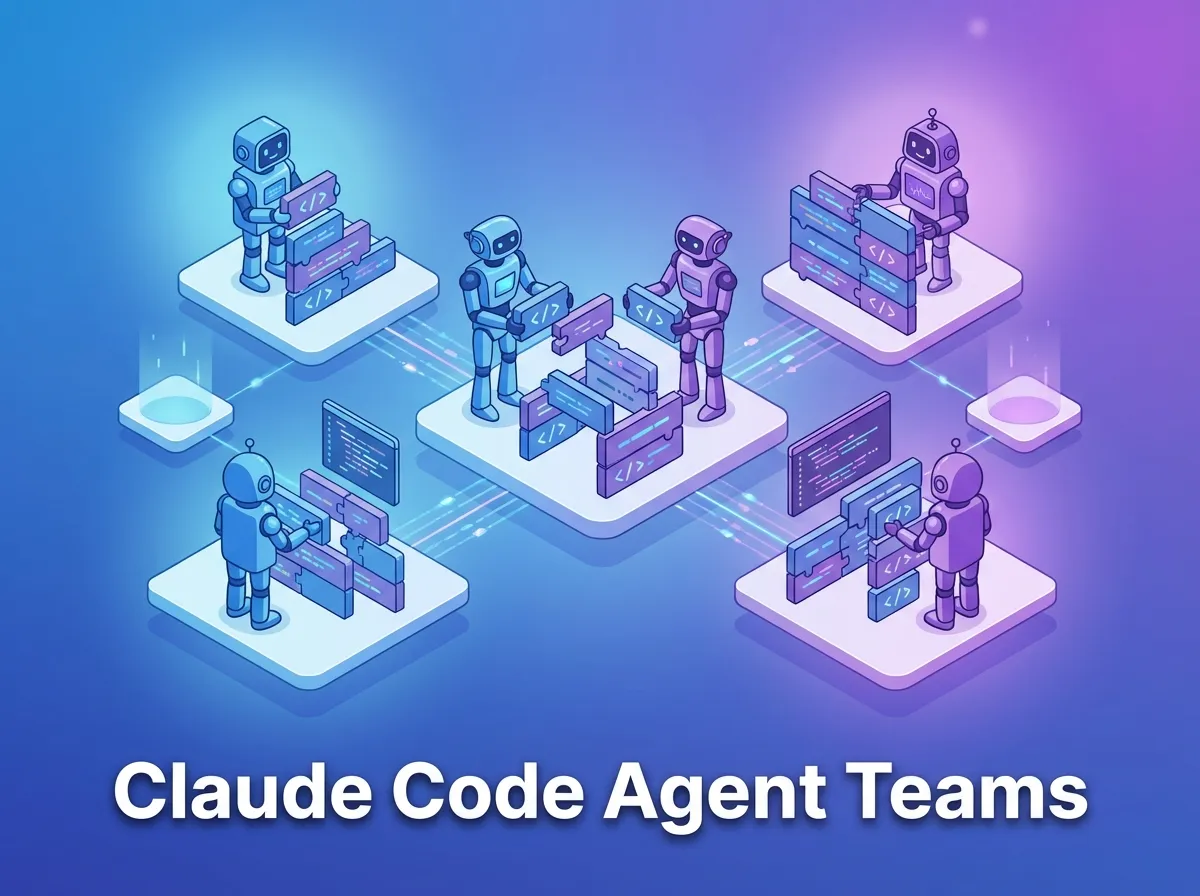
Oh My ClaudeCode (OMC) offers 32 agents, 40 skills, and 5 execution modes. The documentation is massive, and it's hard to know what to use when. After a few days of real usage, I found that only a handful of features get used regularly. Here's a rundown of those.
Installation
/plugin marketplace add https://github.com/Yeachan-Heo/oh-my-claudecode
/plugin install oh-my-claudecode
/oh-my-claudecode:omc-setup
3 Core Keywords

1. ralplan
A combination of planning and relentless execution. Great for complex feature implementations.
ralplan: implement user authentication systemIt gathers requirements through an interview-style process, then works until completion without giving up.
2. autopilot
Fully autonomous mode. Use it when you have a clear task and want to step away.
autopilot: write React component tests3. ultraqa
Runs QA cycles autonomously. It repeats testing and fixing until the goal is met.
ultraqa: write tests for all API endpointsReview Commands

The slash commands for code review are surprisingly useful:
| Command | Purpose |
|---|---|
| /review | General code review |
| /code-review | Detailed code review |
| /security-review | Security vulnerability check |
| /analyze | Codebase analysis |
Running /security-review before a PR catches things you might have missed.
Agent-Level Model Routing
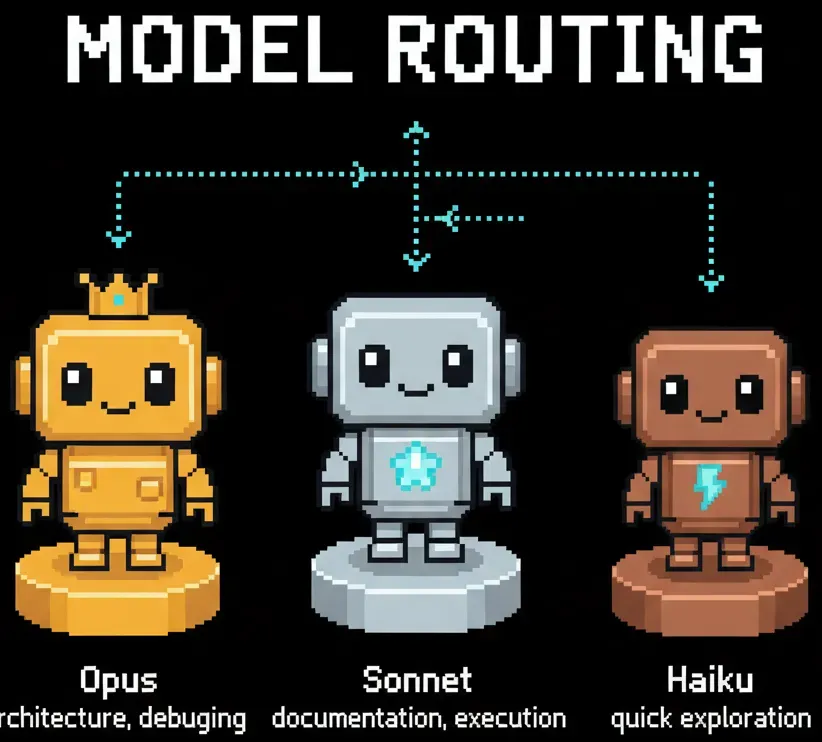
This is OMC's hidden strength. It automatically selects the right model for each task type, optimizing token usage:
| Agent | Model | Purpose |
|---|---|---|
| architect | Opus | Architecture, debugging, root cause analysis |
| researcher | Sonnet | Documentation, multi-repo research |
| explore | Haiku | Quick codebase exploration |
| executor | Sonnet | Focused execution |
| designer | Sonnet | UI/UX work |
| writer | Haiku | Technical documentation |
| vision | Sonnet | Visual analysis |
| critic | Opus | Plan critique |
| analyst | Opus | Pre-analysis, hidden requirements |
| orchestrator | Sonnet | Todo coordination |
| planner | Opus | Strategic planning (interview-based) |
| qa-tester | Sonnet | CLI/service testing |
Simple exploration goes to Haiku, complex analysis goes to Opus. Users don't need to worry about it — it optimizes automatically.
The cost savings are noticeable. The bills I used to get running Sonnet 3.5 at a similar intensity a few months ago feel comparable to running Opus 4.5 now. Opus is still an expensive model, sure, but model routing ensures it's only used where it's truly needed, keeping overall costs in check.
HUD: Real-Time Session Usage

I used to check usage manually with npx ccusage@latest, but OMC's HUD feature shows session limits in real-time.
Over the weekend, I hit the limit about 5 times, and the percentage shown matched the actual limit timing accurately. Being able to predict when you'll hit the limit makes planning your work sessions much easier.
Weekend Usage Stats

Over 4 days of heavy usage, ccusage showed about $200 in token consumption. Since it's a subscription model, I didn't actually pay that much — think of it as a reference for usage intensity.
I hit the limit 5 times, and the HUD percentage closely matched the actual limit timing. This meant no surprise stops mid-work — I could prepare in advance.
Things I Haven't Tried Yet
There are other modes like Swarm, Pipeline, and Ecomode that I haven't gotten around to. I'll write about them separately if I do.
Wrapping Up
OMC's documentation is massive, and it's overwhelming at first. Starting with ralplan, autopilot, and ultraqa, then gradually adding review commands as you get comfortable — that's the realistic approach.
Agent-level model routing and HUD usage tracking are bonus convenience features that come along for the ride.